Tuesday, August 14, 2018

INTERESTING INSTRUMENTS: Sousaphone

Today's instrument: the 

Sousaphone

Sousa-what?! 

Sousaphone

Contrary to what you might think, Dr. Seuss did NOT create this instrument. If he did, no doubt it would be spelled SEUSSaphone and be a pretty wacky looking instrument, having 4 or 5 bells of the instrument going every which way and featuring a super fun character playing it. (He would probably also write some snazzy lyrics to go with the music, containing the rhymiest of rhymes, naturally). AM I RIGHT or AM I RIGHT?

 Did you not think that...? Oh.....

I BET YOU'RE THINKING ABOUT IT NOW. And to you I would say, nay nay!

For starters, let me tell you what a sousaphone is:

the sousaphone is a type of tuba that contains a large, flared adjustable bell, pictured below. 

sousaphone

The pretty little thing shown above is a brass sousaphone. It is one of the lowest brass instruments. To the plain eye, it looks just like a tuba. Well, technically it IS a tuba, but there is a difference. And a fairly obvious physical difference when one sees them side by side. 

Let's clarify:

tuba


A tuba is a brass instrument that contains 3-6 brass  valves and a broad bell (the bell being the large opening of the instrument) typically facing UPWARDS. . 

FUN FACT: it is the BIGGEST instrument in the brass family as well as the LOWEST; and it plays in the bass pitch. It is also one of the LOUDEST, if featured in an orchestra. WOW, what can't this baby do?! 


sousaphone


Let's talk about the sousaphone one more time, a little more in depth:
A sousaphone is, as mentioned, a type of tuba, with their wide bell pointing FORWARD, above the player's head. It is said that the sousaphone is easier to play whilst standing, which is why you'll see this bad boy being played in marching bands.


FUN FACT: this instrument was named after composer and bandmaster John Philip Sousa (see, NOT Dr. Seuss). Pictured BELOW↙:
John Philip Sousa
The handsome devil pictured above ↑ was an AMERICAN-BORN composer. He was born in Washington D.C. in 1854 and died in Reading, Pennsylvania in 1932. I know what you're thinking... WHY does this man's name sound SO familiar?? Well, this guy wrote a little song called Stars and Stripes Forever, maybe you've heard of it! Not only did he write this super iconic and super American song, he also fought for our country! #RESPECT 


Anyway, now you know the difference and a little more about the sousaphone (which you may not have actually known was the sousaphone)! So similar, but oh so different! 
BUT, GET THIS, the tuba was named after a man called John Tuba... can someone say COINCIDENCE?

Just kidding, we have Sir Wilhelm Friedrich Wieprecht and Sir Johann Gottfriend Moritz to thank for that instrument! Thanks, gents!

Next tie you're at a football game or an event with a marching band, keep an eye out for the sousaphone! Impress you friends with these awesome FUN FACTS!

Who doesn't love a good fun fact, or two, or three?

You're welcome.


The more you know!!

Fun facts about Tuba vs. Sousaphone courtesy of:
https://www.differencebetween.com/difference-between-tuba-and-vs-sousaphone/
(how convenient!)


#MyPhil #MichiganPhil #MichiganPhilharmonic #music #classicalmusic #musichistory #sousa #funfact #instrument #justdiscovered #themoreyouknow #getyourphil #classical #musician


Tuesday, August 7, 2018

Composer Fun Facts!

If you LOVE music and you LOVE fun facts, you have arrived at just the right place! 
Enjoy these fun facts about some of the world's favorite composers!! 
Plus, who doesn't love a good fun fact, am I right? 

*Each composer name has a link! As you read, listen to these composers! You may recognize a few of the pieces!


Gioachino Rossini


1.) Gioachino Rossini wrote the aria Di tanti palpiti while waiting for his risotto to finish cooking in a restaurant in Venice, Italy. Just for the record, it takes between 12 and 17 minutes for a chef to create an entree from the time it is ordered. This means that it took Rossini to compose most, if not all, of this piece in that time period. When you got it, you got it! 


Orlande de Lassus


2.) Orlande de Lassus was a Franco-Flemish composer who was born in 1532 and died in 1594. He was a Renaissance composer who wrote many classical-style and choral pieces. Besides being a talented musician, de Lassus actually had a beautiful singing voice. So beautiful, that as a child, he was kidnapped several times so others could profit off him! Oh, the Renaissance era!


Franz Liszt

3.) Hungarian-born pianist and composer Franz Liszt was born in 1811 and died in 1886. He began his career as a Romantic (the era....though some, especially ladies, thought he and his music were oh so dreamy) composer in 1822 at the age of 11. Throughout the rest of his career, he became so well-known (and, as mentioned, popular among the ladies), that many people would often ask him for locks of hair. When the demands got out of control, he got a dog and sent out the dog's fur instead. 


Liszt 1, Public 0.


Wolfgang Amadeus Mozart


4.) The oh so well-known 
Wolfgang Amadeus Mozart, is an Austrian composer who remains one of the most prolific, versatile, and popular composers of all time! So much so, that Salzburg confectioner Paul Furst created and named the infamous Mozartkugal after him in 1890! It is sold worldwide, but remains Austria's #1 chocolate sold to this day. This is technically not about Mozart's career, but do YOU have chocolate named after you?! #funfact


Havergal Brian


5.) Have you ever heard of Havergal Brian? He is a British composer who was very prolific himself, creating 32 symphonies, many of which were long and needed many people to perform it. How many people do you think that means? Try in the ballpark of about 800 people. Havergal Brian's Symphony No. 1: the Gothic, requires 800 people to perform it! Calling ALL musicians for this one!


Domenico Scarlatti


6.) Hey cat-lovers! Looking for something fun to do with your furry little friend? Look no more! Be like Italian Composer Domenico Scarlatti and create music! (or just be inspired). Scarlatti's Cat Fugue was inspired by his feline friend, Pulcinella, walking across his keys! It could have very well been an accident, but it could have also been on purpose (we don't know)! Where do you get your inspiration from? Look in unusual places....or at your cat!


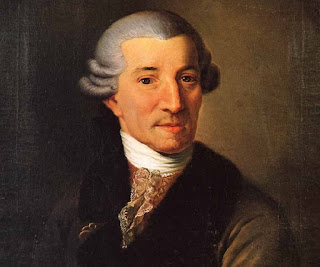
Joseph Haydn

7.)We have talked about Mozart, but when one mentions Mozart, one must mention Austrian composer, Joseph Haydn. They are both famous in their own right, both composing some of the greatest pieces of all time. But, did you know they were friends?! I am talking the best of friends! They were definitely meant to be friends, as they both LOVED to joke around and fill a room with laughter. Not to mention they would get together quite frequently for jam-seshes on their violins and violas. Can you say two-of-a-kind?


Jean Baptiste-Lully

8.) Jean Baptiste-Lully was a Baroque composer who, like so many others, often got lost in his music. While off in his musical wonderland, Lully often kept time by hitting his long, sharp-ended staff against the ground. Well, one time he missed the ground and hit something else.. Yep, the sharp staff hit him right in the foot! He refused to get his foot amputated and contracted gangrene. Words of advise: Get lost in the music, let it take you away, but DO NOT use a sharp staff to keep time! On a side note, he also finished the performance before getting it looked at; what a trooper!


Antonio Vivaldi


9.) Baroque violinist and  composer
Antonio Vivaldi became a priest at age 25. Although he was ordained a priest, he decided to follow his passion: music. Vivaldi composed hundreds of works and became a high influence in musical form and pattern.You go Antonio!! OH, one more thing: He was eventually nicknamed "The Red Priest," because he was (1) a red-head and (2) a priest. People are so clever!


Felix Mendelssohn


10.) Oh, you don't know Felix Mendelssohn? Have you ever heard of a little play called Midsummer Night's Dream? Yes, Mr. William Shakespeare wrote the play itself, but our dear Mr. Mendelssohn wrote the music for it.....not once, but twice! Twice? What? Yep, twice! Once upon a time, Mendelssohn's friend, Thomas Attwood, lost the original Overture manuscript for Midsummer Night's Dream. It was the ONLY copy. Oh, but no worries! Instead of freaking out, Mendelssohn just rewrote the entire piece from memory. The two also remained friends. What a guy! We all need a friend like Mendelssohn!


The more you know!

Fun Facts courtesy of:
https://www.pianotv.net/2016/12/17-interesting-facts-classical-composers/
&


Tuesday, April 17, 2018

Arts Advocacy Day


Tomorrow is Michigan Arts Advocacy Day! We stand with the arts because we understand the important role that the arts play in society on all levels. Whether your attending a museum, a gallery, or a Michigan Philharmonic concert, you are supporting the local arts. It is important to support creativity in and around your community to ensure that the arts thrive across Michigan. For many years the arts have relied on patrons to support works that you enjoy every day, and funding today is no different. One of the biggest funders of the arts is the State. The State knows the impact that the arts has on the economy and supports the arts because of such. You can read more about the impact of the arts on the economy and a community here: http://www.creativemany.org/wp-content/uploads/2018/04/Fast-Facts_V4.pdf.
Luckily the proposed 2019 Michigan Budget has the $1 million one-time funding from the previous budget carried over to this year, but Creative Many is pushing for increased funding for the MCACA (Michigan Council for the Arts and Cultural Affairs) to $12.5 million. Even if you can’t join us in Lansing tomorrow, you too can help fight for the arts by contacting your lawmakers. You can follow this link to find all the ways to support the arts: https://creativemany.us8.list-manage.com/track/click?u=2692ade5856ed83d5b391ddc3&id=a1ea49118d&e=3524097f9c
We stand with the arts and @CreativeMany to support the arts and culture in Michigan. Join the conversation using the hashtags #ArtsMeanMore and #CreativeMIVotes and share why art is important to you.


Wednesday, April 4, 2018

Cabaret


A cabaret is a form of entertainment featuring music, dance, drama, or recitation, that is distinguished by the performance venue which is most often a pub, restaurant, or nightclub with a performance stage. The entertainment—performed in front of an audience who is often dining or drinking—is done by an ensemble and often but not always oriented towards an adult audience. Early cabarets in 16th century Paris were much like the ancestors of the modern restaurant. Although there was no formally programmed entertainment, the customer might sing if enough wine had been consumed during the meal. In the 18th century the café-concertor café-chantant appeared which offered food and wine like the early cabarets but also featured music, singers, and musicians. The cabaret continued to evolve, becoming a venue that combined music and entertainment with political commentary and satire. Competition from Music Halls and later motion pictures forced cabarets to put on more complex and spectacular shows. Although other cultures like Germany, the Dutch, and the British developed similar cabarets, it was the French cabaret scene that was imported to America in 1911 by Jess Louis Lasky—founder of Paramount Pictures. The American cabaret clubs turned to different styles due to the influence of jazz music and the big band scene, and Chicago cabaret especially peaked during the 20s where they were often featured as speakeasies and steakhouses during the Prohibition Era. The American cabarets never developed the social commentary level of its French predecessor, and the cabarets were soon overtaken in popularity by rock concerts, television variety, shows, and comedy theaters. Cabaret survives today in Vegas-style dinner shows, drag performances, and burlesque shows and even solo vocalist and pianist style performances in bars.
The Michigan Philharmonic is certainly not underground, and our concerts can be enjoyed by all ages, but we are throwing our own Cabaret Café April 14th at 7:30pm with Danzones y Tango. Join us at P.A.R.C. for a night filled with great music, some delicious South American coffees and liquor, and a whole bunch of fun.


Photo via: https://en.wikipedia.org/wiki/Cabaret

Tango


Tango music is the style of music that accompanies the tango style of dance whose present forms can originated in the Río de la Plata during the mid-19th century. While there are also styles that originated in Cuba and Spain in the 19th and early 20th century, all forms stress the influence of African communities on the tango dance and music, as well as the use of instruments and techniques brought by European immigrants. In its early years the tango was mostly played by and for the lower classes, but in the 20s tango spread in popularity across Europe, then the United States, and was soon considered a more respectable form of music and dance performed by and for the upper and middle class. This led to the “Golden Age” of tango music, often considered to be from 1935 to 1952. During this period tango music was performed by orquestas tipicas—orchestras that specialized in popular music of the time. These groups often included over a dozen performers. The orquestas tipicas existed very parallel to the big band era of the United States, with the most popular band leaders like Osvaldo Pugliese and Carlo di Sarli recorded many pieces with their orchestras.  Tango nuevo came to dominate the later age of tango, with composers like Ástor Piazzolla trying to create a more academic form. This style of tango music sought to break classical tango forms and create a jazz-fusion style. One of the most recent styles to emerge is the neotango style which features anything from a subtle to a dominant electronic influence pioneered by groups like Tanghetto and Gotan Project.
Join the Michigan Philharmonic April 14th at 7:30pm in P.A.R.C. for our Danzones y Tango: A Cabaret Café as we celebrate the rhythm, passion, and soul of Latin music and feature performances from Principal Cellist Amy Kuras and vocalist Kathryn Calzone. The orchestra will be playing music from Ástor Piazzolla and Leonard Bernstein to Gloria Estefan as well as a piece by our special guest composer Ricardo Lorenz.


Photo via: https://www.flickr.com/photos/prayitnophotography/15868911669/

Tuesday, April 3, 2018

Ricardo Lorenz


Venezuelan-born composer Ricardo Lorenz is praised for his fiery orchestrations, harmonic sophistication, and rhythmic vitality. His compositions have been performed by many orchestras around the world, and Ricardo has served as Composer-in-Residence in several programs as well, including the Chicago Symphony Orchestra’s Armonía Musicians Residency Program, the Billings Symphony, and the Music in the Loft chamber music series. Ricardo Lorenz has resided in the United States since 1982, but he has always kept close ties with Latin America. While he was Interim Director of the Indiana University Latin American Music Center he established a network of composers from Latin America and compiled the sourcebook Scores and Recordings for the Latin American Music Center.  This was nominated to receive the 1996 Best General Reference Source Award by the Association of Recorded Sound Collections. He’s also worked with many well-known Latin-American musicians including Tito Puente, David Sánchez, and Claudia Pérez. He holds degrees from and has taught at both the University of Chicago and Indiana University, and is currently Associate Professor of Composition at Michigan State University. The Michigan Philharmonic will be performing Ricardo Lorenz’s piece Habanera Science during the April Concert Danzones y Tangos: A Cabaret Café on April 14th at the P.A.R.C. at 7:30pm.

photo via: Sergei Kvitko


Tuesday, March 20, 2018

Music In Our Schools Month


March is Music In Our Schools Month, when music educators, students, and communities from around the United States promote the benefits of music education programs in schools. Started as an advocacy day in 1973 by the National Association for Music Education, it grew to become a month-long celebration by 1985. The Michigan Philharmonic is proud to support music educators and continue music education in not only our progressive programming, but also through our community outreach and education programs in the schools. Every year the Michigan Philharmonic works with regional school districts to organize the CLASSical Music Partnership. This unique music program is designed to introduce 3rd, 4th, and 5th grade students to classical music and the instruments that make up the orchestra. Developed in collaboration with educators to complement standard curriculum, the goals of the CLASSical are to:
  • Supplement and enhance school music programs
  • Integrate music into Science and Language Arts 
  • Give students the experience of live performances with professional 
  • Hear classical music students might recognize by great 
  • Educate students about composers and 
  • Demonstrate the four instrument families of the 
  • Learn about musical composition by working with professional classical music composers in the classroom

The Michigan Philharmonic understands the important role of arts and humanities in a well-rounded education and that’s why we promote March as Music In Our Schools Month. Join us on March 28th for the 100 Women Strong 3rd annual fundraiser as we celebrate the power of women in support of women education. #MIOSM #MusicConnectsUs